
A.c brake motor manufacturer in Ahmedabad
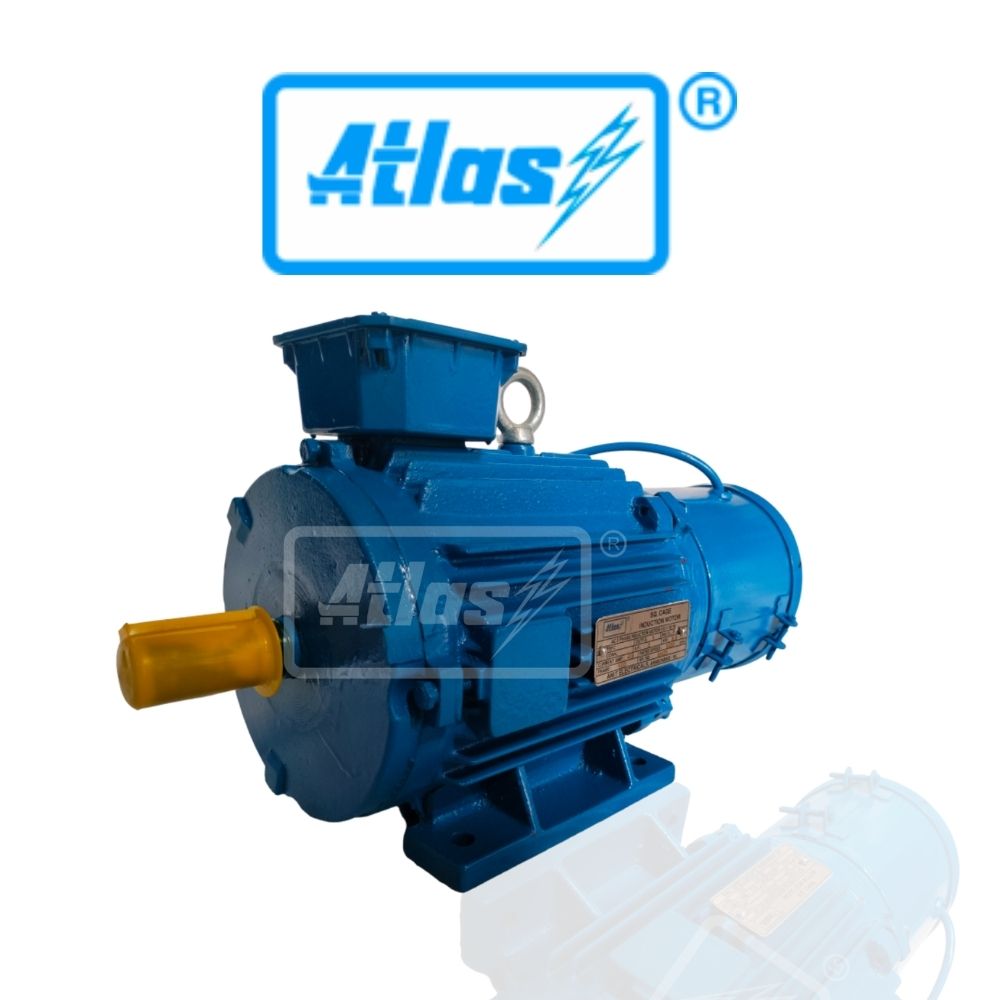
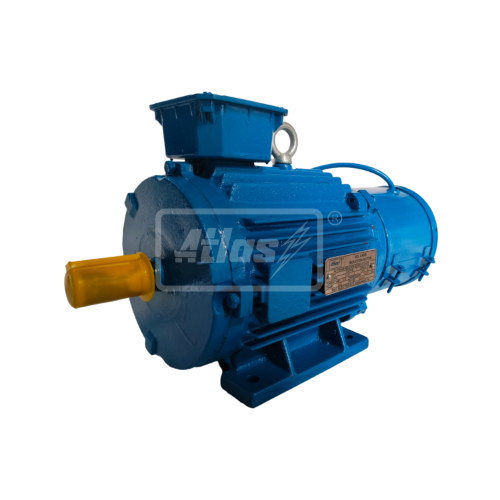
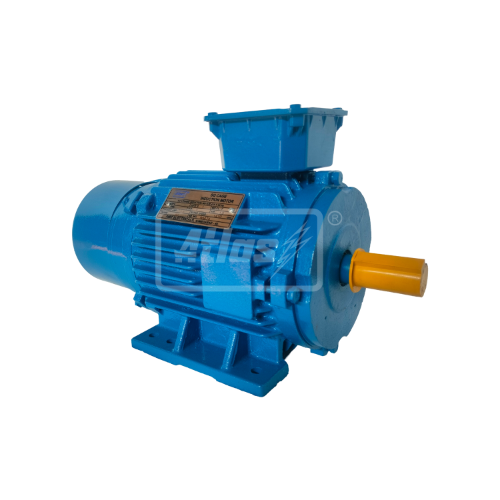
Atlas Electricals is a trusted AC Brake Motor Manufacturer in Ahmedabad, offering reliable three-phase AC brake motors for various industrial applications. Our motors are built for smooth operation, quick and reliable braking, and long-lasting performance. They require low maintenance and are designed to work efficiently even in demanding industrial environments.
Our AC Brake Motors are available in different power ratings, frame sizes, pole configurations, and mounting options to suit various industrial machinery and equipment. Built with strong construction and quality components, these motors deliver smooth, reliable performance and are designed for long-lasting use with minimal maintenance.
High-Performance AC Brake Motors
Atlas Electricals manufactures high-performance AC brake motors with an integrated AC motor and brake system, making them suitable for applications that require quick and controlled stopping. When the power supply is switched off, the fail-safe brake automatically engages to stop and hold the motor shaft in position. This feature makes AC brake motors for industrial applications a practical choice where safety, controlled movement, and quick stopping are important.
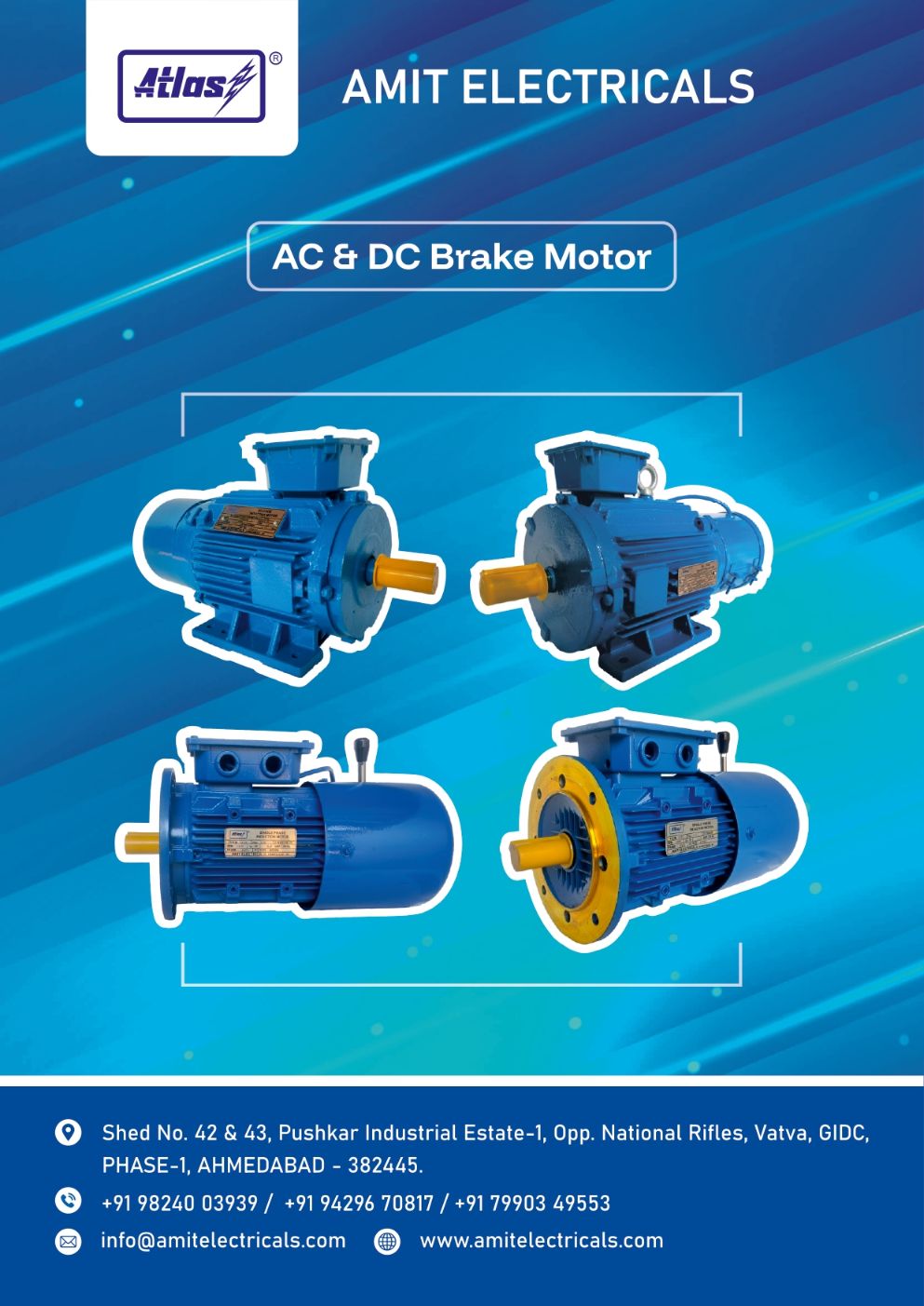
Our AC brake motors are available from 0.25 HP to 50 HP, with frame sizes ranging from 63 to 225M. Different mounting configurations, including B3 foot mounting, B5 flange mounting, and B14 face mounting, are available to suit different industrial machinery and equipment requirements.
An AC brake motor operates using standard AC power to generate movement. When the power supply is turned off, the integrated brake automatically engages and stops the motor. The brake can also hold the shaft in position, helping prevent unwanted movement when the machine is not operating.
The main advantage of an industrial AC brake motor is its quick and dependable braking system. Since the braking mechanism is integrated into the motor, a separate braking arrangement is generally not required. This makes AC brake motors suitable for machinery that needs quick stopping, improved operational safety, precise movement, and reliable performance.
An AC brake motor works on regular AC power to run the motor and produce movement. When the power is turned off, the built-in brake automatically comes into action and stops the motor. It also helps hold the shaft in place, preventing the machine from moving when the power is off.
What makes AC brake motors useful is their quick and reliable braking system. Since the brake is built into the motor, there is usually no need for a separate braking arrangement. This makes them a practical choice for machines that need quick stopping, better safety, and dependable performance.
Key Features and Benefits of AC Brake Motors
Applications of AC Brake Motors
AC brake motors are used in various industrial applications where quick stopping, controlled movement, accurate positioning, and safe operation are required. Common applications include lifting equipment, textile machinery, machine tools, rolling mills, cable-reeling systems, and automated industrial equipment.
Lifting Machinery
AC brake motors for cranes and hoists are widely used in lifting and material-handling equipment. Their integrated braking system helps stop and hold the motor shaft when required, making them suitable for cranes, hoists, lifts, and other lifting machinery where controlled movement and safe load handling are important.
Textile Machinery
AC brake motors for textile machinery provide smooth and controlled motor operation for applications where precise stopping and consistent movement are required. Their reliable braking performance can help reduce unwanted movement and support efficient operation of textile production equipment.
Geared Motor Systems
AC brake motors can be integrated with geared motor systems and industrial automation equipment where controlled stopping and positioning are required. The built-in brake helps stop the motor at the required point and can hold the shaft when the power supply is disconnected.
Cable Reeling Drums
AC brake motors for cable reeling drums are suitable for applications that require controlled starting, stopping, and positioning. The integrated braking system helps control cable movement and supports reliable operation of cable-reeling equipment used in industrial environments.
Rolling Mills and Machine Tools
AC brake motors for rolling mills and machine tools are suitable for demanding industrial applications where quick stopping, accurate positioning, and dependable performance are required. Their braking system helps provide controlled operation during frequent start-and-stop cycles.
Technical Specifications of AC Brake Motors
When selecting an AC brake motor for industrial machinery, it is important to consider the motor’s power rating, frame size, voltage, insulation class, protection rating, mounting arrangement, shaft design, and bearing specifications. The correct combination depends on the machine, load, operating environment, and application requirements.
Power Rating
Atlas AC brake motors are available from 0.25 HP to 50 HP (0.18 to 37 kW). The appropriate motor power depends on the machine load, required torque, operating cycle, and application.
Frame Size
Our AC brake motors are available in frame sizes from 63 to 225M. The required frame size depends on the motor power, mounting arrangement, shaft dimensions, and available space in the industrial machine.
Voltage Options
The standard supply for our AC brake motors is 415V ±5%, 50Hz. Other voltage options, including 220V, 380V, 460V, and 525V, may also be available depending on the specific motor requirement and application.
Insulation Class
AC brake motors generally use Class F insulation for reliable industrial operation. Class H insulation can be selected for applications requiring higher temperature resistance, depending on the motor design and operating conditions.
Protection Rating
The standard protection rating is IP44, while IP54 and IP55 AC brake motors can be supplied where improved protection against dust and moisture is required. The appropriate IP rating should be selected according to the motor’s installation and working environment.
Mounting Options
Atlas AC brake motors are available with different mounting arrangements to suit various industrial machines, including:
- B3 – Foot Mounted AC Brake Motor
- B5 – Flange Mounted AC Brake Motor
- B14 – Face Mounted AC Brake Motor
These mounting options allow the motor to be installed according to the mechanical design and space requirements of different industrial equipment.
Shaft and Rotor
The motor shaft can be manufactured using strong EN-8 or EN-9 steel, providing suitable strength for industrial applications. High-quality aluminum can be used for the rotor depending on the specific motor design to support reliable operation and performance.
Bearings
Our motors use C3 ball bearings to support smooth and reliable operation. Suitable lithium-based grease may be used for applications requiring operation at elevated temperatures, up to approximately 150°C, subject to the specific motor and bearing design.
How to Choose the Right AC Brake Motor
Selecting the right AC brake motor for your industrial application depends on several factors, including motor power, operating speed, load, braking requirements, mounting arrangement, voltage, duty cycle, and working environment.
Before selecting an AC brake motor, consider:
- Required motor power and torque
- Operating speed and pole configuration
- Required braking performance
- Machine load and duty cycle
- B3, B5, or B14 mounting requirement
- Required voltage and frequency
- Environmental conditions and required IP protection
- Required insulation class
- Available installation space
- Application-specific safety requirements
Choosing the correct motor specifications helps ensure reliable operation, efficient performance, and longer service life.
Maintenance and Care for AC Brake Motors
Regular maintenance is important to keep an AC brake motor operating efficiently and to extend its service life. Proper inspection can also help identify potential electrical, mechanical, or braking problems before they affect machine operation.
To maintain your AC brake motor:
- Regularly inspect the AC brake system to ensure proper brake engagement and release.
- Keep the motor clean and free from excessive dust, dirt, and debris to help prevent overheating.
- Check bearings regularly and lubricate them according to the manufacturer’s recommendations.
- Inspect electrical connections and terminals for looseness, wear, or signs of overheating.
- Check the motor for unusual noise, vibration, or temperature during operation.
- Ensure the motor is operating within its specified voltage, load, and temperature limits.
- Inspect the mounting arrangement and foundation to ensure the motor remains securely installed.
With proper installation and regular maintenance, industrial AC brake motors can provide reliable performance and long-term service.
Applications of AC Brake Motors
AC brake motors are used in many industries where machines need reliable stopping, better control, and safe operation. Some common applications include:
Lifting Machinery
AC brake motors are widely used in cranes, hoists, and lifts. Their quick braking helps stop and hold the load safely, making them suitable for lifting and material-handling equipment.
Textile Machinery
In textile machines, smooth and controlled motor operation is important. AC brake motors help reduce unwanted movement and provide better control, supporting consistent and efficient production.
Geared Motors
AC brake motors are often used with geared motor systems and automation equipment where precise stopping is required. The built-in brake helps the machine stop at the right time and position.
Cable Reeling Drums
These motors are useful in cable reeling systems where controlled starting, stopping, and positioning are important. The braking system helps keep the cable movement smooth and controlled.
Rolling Mills & Machine Tools
Rolling mills and machine tools often require accurate speed control and quick stopping. AC brake motors provide reliable braking and controlled operation, making them suitable for demanding industrial applications.
Technical Specifications of AC Brake Motors
When choosing an AC brake motor, it is important to check the motor specifications and make sure they match your machine and working conditions. Here are the key specifications to consider:
Power Rating
AC brake motors are available from 0.25 HP to 50 HP (0.18 to 37 kW). The right power depends on the type of machine and the load it needs to handle.
Frame Size
Frame sizes generally range from 63 to 225M. The required frame size depends on the motor power, mounting arrangement, and application.
Voltage Options
The standard supply is 415V ±5%, 50Hz. Other voltage options, such as 220V, 380V, 460V, and 525V, can also be available depending on the requirement.
Insulation Class
Most motors come with Class F insulation for reliable everyday industrial use. Class H insulation can be selected for applications that operate at higher temperatures.
Protection Rating
The standard protection is IP44, while IP54 and IP55 options are available when better protection against dust and moisture is needed.
Mounting Options
Depending on the machine design, AC brake motors can be supplied with different mounting arrangements, including:
- B3 – Foot mounting
- B5 – Flange mounting
- B14 – Face mounting
Shaft and Rotor
The motor shaft can be made from strong EN-8 or EN-9 steel, while high-quality aluminum is used for the rotor to support reliable and long-lasting performance.
Bearings
The motors use C3 ball bearings for smooth operation. Lithium-based grease can also be used for applications where the motor needs to work at higher temperatures, up to around 150°C, depending on the specific motor design and bearing specification.
Why Choose Atlas Electricals for AC Brake Motors?
Atlas Electricals is an experienced AC Brake Motor Manufacturer in Ahmedabad, providing reliable motor solutions for different industrial requirements. We offer AC brake motors in multiple power ratings, frame sizes, mounting configurations, and technical specifications to suit different types of industrial machinery.
Our focus on robust construction, reliable braking, quality components, and application-specific solutions makes Atlas Electricals a dependable choice for customers looking for AC brake motors in Ahmedabad and industrial motor solutions.
| Category | Details |
|---|---|
| Company Name | AMIT ELECTRICALS |
| Brand | Atlas |
| Product Name | AC Brake Motor |
| Operation | Motor and Brake both operate with AC voltage |
| Brake Type | Fail Safe (Power off - Shaft lock) |
| Range of Production |
Three Phase AC Brake Motor Power: 0.25 to 50 HP (0.18 to 37 KW) Frame: 63 to 225M Poles: 2, 4, 6, 8, 10, 12 |
| Mounting Types | Foot (B3) Flange (B5) Face (B14) |
| Frame Material | Robust cast iron frame with integral feet Aluminum body available up to 100L frame (on request) |
| Insulation | Class F (Standard) Class H (on request) |
| Ratings |
S1: Continuous Duty S2: Short Time Duty S3: Intermittent Periodic Duty S4: Intermittent with Starting Duty S5: Intermittent with Starting and Electrical Braking |
| Voltage & Frequency |
Standard: 415 ± 5%, 50 Hz ± 3% Optional: 220, 380, 460, 525 V at 50 or 60 Hz (on request) |
| Protection |
IP44 (Standard) Optional: IP54, IP55 (on request) |
| Shaft & Rotor |
Shaft: EN-8 or EN-9 material Rotor: High-pressure E.C. Grade aluminum die-cast Dynamically balanced to reduce vibration & noise |
| Bearings & Lubrication |
Bearings: C3 ball bearings Lubrication: Lithium-based grease (up to 150°C) |
| Thermal Overload Protection | Optional T.O.P. switch available on customer request |
| Terminal Box | Top position for Foot mounted (B3) Left/right positions available (on request) |
| Earthing Terminals | Minimum two: one in terminal box, one on foot |
| Application |
Lifting machinery Textile machinery Geared motors Cable reeling drums Rolling mills Machine tools |
| Features |
Highly efficient Noise-free Vibration-free Low running cost Durable Smooth finishing Cost-effective Precision design |