d.c. brake motor
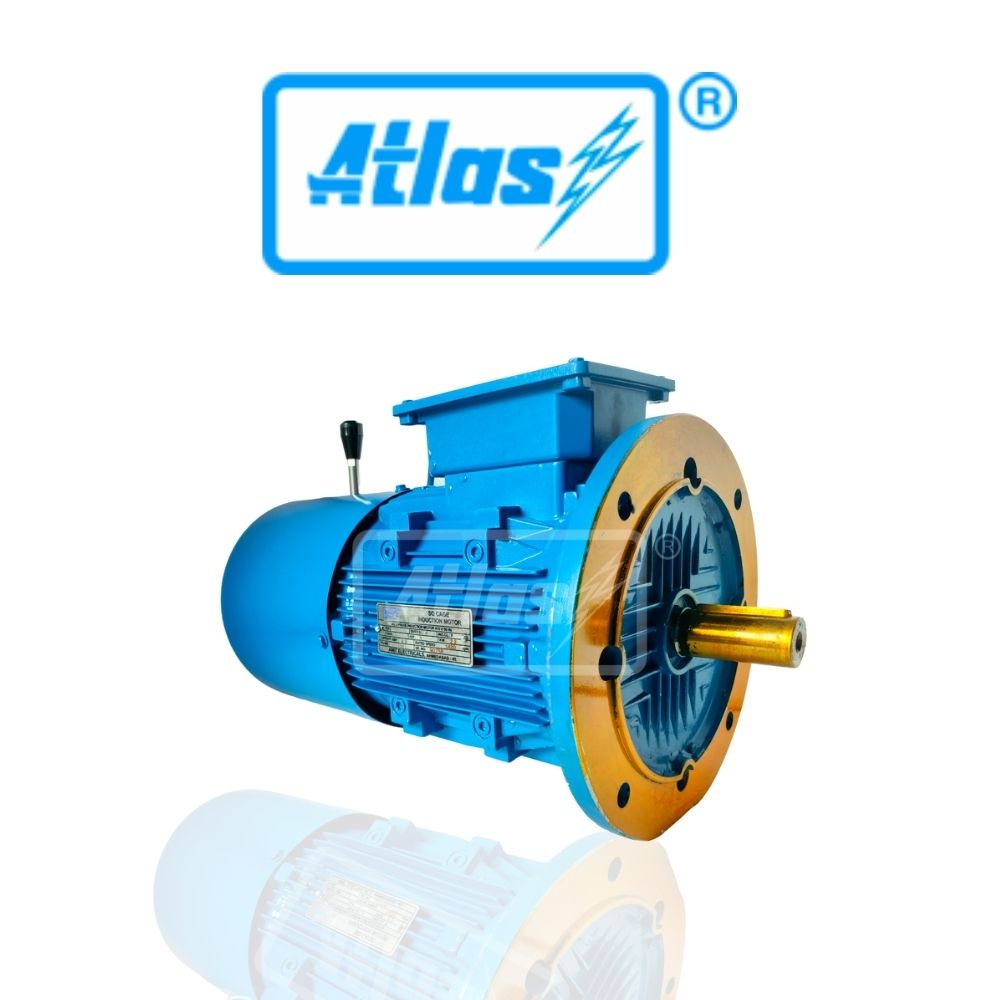
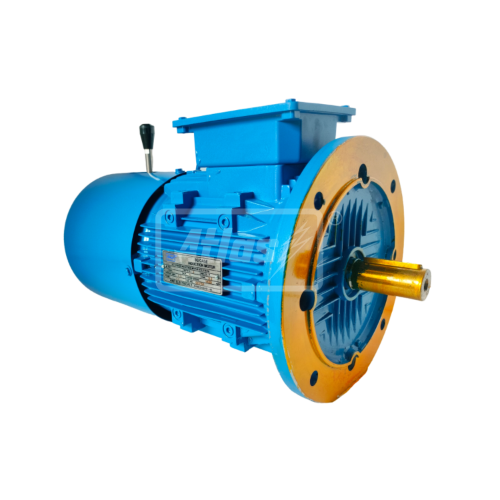
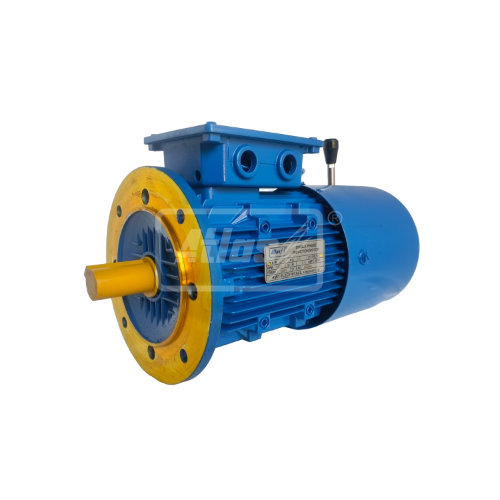
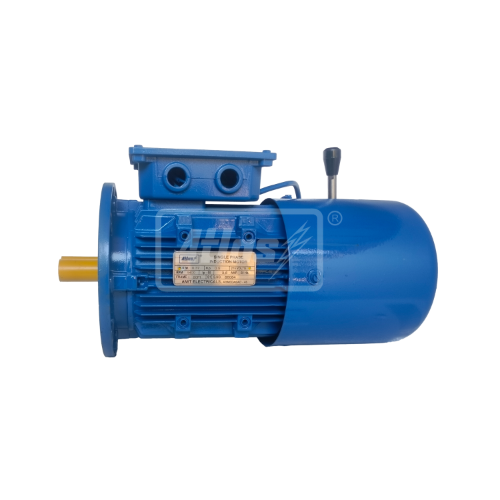
| Category | Details |
|---|---|
| Company Name | AMIT ELECTRICALS |
| Brand | Atlas |
| Product Name | DC Brake Motor |
| Operation | Motor operates on AC voltage and brake operates on DC voltage via Rectifier or SMPS |
| Brake Types | Fail Safe Brake (Power OFF - Shaft Lock) and Normally Off Type Brake (Power ON - Shaft Lock) |
| Use Cases | Widely used in cranes and emergency-stopping applications |
| Range of Production |
Three Phase DC Brake Motor Power: 0.25 to 50 HP (0.18 to 37 KW) Frame: 63 to 225M Poles: 2, 4, 6, 8, 10, 12 |
| Brake Voltage | 24 VDC, 96 VDC, 190 VDC |
| Mounting Types | Foot (B3) Flange (B5) Face (B14) |
| Frame Material |
Cast iron with integral feet (Standard) Aluminum body available up to 100L frame (on request) |
| Insulation |
Class F (Standard) Class H (on request) |
| Ratings |
S1: Continuous Duty S2: Short Time Duty S3: Intermittent Periodic Duty S4: Intermittent with Starting Duty S5: Intermittent with Starting and Electrical Braking |
| Voltage & Frequency |
Standard: 415 ± 5%, 50 Hz ± 3% Optional: 220, 380, 460, 525 V at 50 or 60 Hz (on request) |
| Protection |
IP44 (Standard as per IS:4691) Optional: IP54, IP55 (on request) |
| Shaft & Rotor |
Shaft: EN-8 or EN-9 material Rotor: High-pressure E.C. Grade aluminum die-cast Key joint lock, dynamically balanced for low vibration & noise |
| Bearings & Lubrication |
Bearings: C3 ball bearings Lubrication: Lithium-based grease (up to 150°C) |
| Thermal Overload Protection | Optional T.O.P. switch available for overload safety |
| Terminal Box | Top position for Foot mounted (B3) Left/right on request |
| Earthing Terminals | Minimum two: one in terminal box, one on foot |
| Application |
Lifting machinery Textile machinery Geared motors Cable reeling drums Rolling mills Machine tools |
| Features |
Highly efficient Noise-free Vibration-free Low running cost Durable Smooth finishing Cost-effective Precision design |
What is a DC Brake Motor? Benefits, Applications, and Technical Specifications
A DC brake motor combines a DC motor with a built-in braking system to provide controlled and reliable stopping. When quick stopping and accurate movement are important, these motors can help improve both safety and machine performance.
DC brake motors are commonly used in applications such as cranes, hoists, material-handling equipment, textile machinery, and other industrial machines where controlled starting, stopping, and positioning are required. The integrated brake system helps stop the motor efficiently and can also hold the shaft in position when the motor is not running.
How Do DC Brake Motors Work?
A DC brake motor works by combining a DC motor with a built-in braking system. The motor converts electrical power from a DC supply into mechanical movement, while the brake helps stop and hold the motor when required.
During normal operation, the brake remains released so the motor can rotate freely. When the motor needs to stop, the brake engages and brings the shaft to a controlled stop. Depending on the motor design, the brake may be operated using mechanical or electromagnetic force.
Compared with a standard AC motor that may require a separate braking arrangement, a DC brake motor offers an integrated solution for applications where controlled stopping and reliable positioning are important. Once the brake is released, the motor can start running normally again.
Key Features and Benefits of DC Brake Motors
1. Efficient Performance
DC brake motors are designed to deliver reliable performance while keeping energy losses under control. Their braking system also helps provide quick and controlled stopping when required.
2. Precise Control
These motors offer good control over speed, movement, and stopping. This makes them useful for applications such as cranes, conveyors, machine tools, and material-handling equipment, where accurate movement is important.
3. Smooth and Quiet Operation
DC brake motors can provide smooth operation with relatively low noise and vibration when properly selected and maintained. This can be helpful in applications where excessive noise or vibration needs to be avoided.
4. Strong and Reliable Construction
Built for industrial use, DC brake motors are designed to handle regular operating loads and demanding working conditions. With proper installation and maintenance, they can provide dependable service for a long time.
5. Cost-Effective Operation
A well-selected DC brake motor can help reduce downtime and maintenance requirements while providing reliable braking and motor control. This can make it a practical and cost-effective option for industrial applications.
Applications of DC Brake Motors
DC brake motors are widely used across multiple industries, including:
Cranes and Lifting Equipment:
These motors provide immediate braking for safe and controlled lifting and lowering of heavy loads.Textile Machinery:
Used to reduce vibrations and ensure smooth and controlled stopping during textile manufacturing processes.Geared Motors:
Employed in precise speed control applications, ensuring smooth starts and stops.Material Handling and Conveyor Systems:
DC motors for cranes and conveyors provide high precision during stops, ensuring safety in automated production environments.Machine Tools:
DC brake motors are critical in machine tools to ensure safety and precision during manufacturing, especially in processes requiring abrupt stops.
Technical Specifications of DC Brake Motors
When selecting a DC brake motor, it is important to check the specifications based on your machine, power requirement, and working environment. Here are some key specifications to consider:
Power Rating
DC brake motors can be available in a range of power ratings, from 0.25 HP to 50 HP (0.18 to 37 kW). The right motor size depends on the load and type of application.
Voltage and Frequency
Depending on the motor design and application, common voltage options include 220V, 380V, and 415V, with 50Hz or 60Hz frequency options where applicable. The motor should always be selected according to the available power supply.
Insulation Class
Class F insulation is commonly used for general industrial applications, while Class H can be considered for applications involving higher operating temperatures. The right insulation class helps improve reliability and motor life.
Protection Rating
Protection ratings such as IP44 and IP54 help protect the motor from dust and moisture. The appropriate IP rating should be selected according to the environment in which the motor will operate.
Frame Material
DC brake motors may come with cast iron or aluminum frames, depending on the motor size and application. These materials provide a strong and durable housing for industrial use.
Bearings and Lubrication
Good-quality bearings are important for smooth motor operation and long service life. Proper lubrication helps reduce friction, wear, and heat, allowing the motor to run reliably over time.
Maintenance and Care for DC Brake Motors
To extend the lifespan of your DC brake motor, follow these maintenance tips:
Regular Inspection:
Inspect the brake and motor components regularly for wear and tear.Proper Lubrication:
Ensure that bearings are properly lubricated to avoid friction and unnecessary wear.Electrical Connections:
Check electrical connections for cleanliness and tightness.Brake Testing:
Periodically test the brake system to ensure it engages and disengages correctly.
Conclusion
DC brake motors are a reliable choice for industrial applications where smooth operation, controlled stopping, and safety are important. Their built-in braking system helps provide quick and controlled stopping, while their strong construction makes them suitable for demanding working conditions.
Looking for the right DC brake motor for your application? Get in touch with Atlas Electricals to discuss your requirements and get a suitable motor recommendation or quote.
Contact us today to learn more.
FAQ's
Q1: What is the difference between a DC brake motor and an AC brake motor?
The key differences between DC brake motors and AC brake motors are in the type of electrical power they use and the way their braking systems work.
Power Supply:
DC Brake Motor: These motors operate on direct current (DC), which provides a consistent, unidirectional flow of electricity. This allows DC motors to offer more precise control over speed and position. They are also known for having a smoother and more immediate response in terms of speed adjustments and braking.
AC Brake Motor: AC brake motors use alternating current (AC), where the electrical supply alternates between positive and negative cycles. This type of motor can run at different speeds, typically designed to run on standard industrial power systems.
Braking Mechanism:
DC Brake Motor: DC motors are generally equipped with an internal braking mechanism that is activated by the motor’s current. When the motor needs to stop, the braking system is engaged directly by the motor’s operation. This provides rapid and precise stopping abilities. DC brake motors are often used in applications where quick and accurate stopping is necessary, such as in cranes, textile machines, and conveyor systems.
AC Brake Motor: AC motors often require external braking systems or employ spring-loaded brakes that engage when the power is cut off. The braking system in an AC brake motor may rely on either electrical or mechanical means to stop the motor. AC motors are ideal for applications where continuous running is required with variable speeds, such as fans, pumps, and lifts. They are generally slower to respond to braking compared to DC motors, although modern AC brake motors have improved braking mechanisms.
Precision and Speed Control:
DC Brake Motor: Offers better speed control and faster stopping capabilities due to its ability to precisely manage the current flow. This is particularly useful for applications that require precise and fast starts and stops.
AC Brake Motor: AC motors are typically less responsive than DC motors when it comes to speed control and stopping times, as they depend more on external systems for braking.
In summary, DC brake motors provide faster and more precise stopping, making them suitable for high-precision applications, while AC brake motors are more commonly used for continuous motion applications with less demanding stopping requirements.
Q2: How do I maintain my DC brake motor to ensure optimal performance?
To ensure that your DC brake motor operates efficiently and has a long lifespan, regular maintenance is crucial. Below are the key steps for maintaining optimal performance:
Regular Inspections:
Inspect the motor at regular intervals (every 6 to 12 months) to identify potential issues such as wear and tear, debris buildup, or overheating. Pay special attention to the brake components, including the brake pads and springs, as they are key to the motor’s stopping capability.
Check the motor’s windings, brushes, and commutator (if applicable) to ensure they are in good condition and there are no signs of wear.
Lubrication:
Bearings: The motor’s bearings should be lubricated regularly to reduce friction and wear. This will help prevent overheating and damage. Depending on usage, lubricate bearings every 3 to 6 months.
Brake Components: Apply lubricant to the moving parts of the braking system if specified by the manufacturer. This will reduce friction and ensure smooth engagement and disengagement of the brake.
Testing the Braking System:
Periodically test the braking system to ensure it is engaging and disengaging properly. You can perform this by running the motor under normal load and checking for any irregular braking responses or unusual noises that might indicate issues with the brake pads or other components.
Ensure that the brake spring tension is at the right level. An improperly tensioned spring can result in insufficient braking force or excessive wear on the motor.
Cleaning:
Dust and dirt can accumulate inside the motor, affecting both performance and longevity. Clean the motor regularly using compressed air or a soft brush, especially around the ventilation openings. Keep the motor in a clean environment to reduce contamination.
Electrical Check:
Check the electrical connections periodically to ensure there are no signs of overheating, corrosion, or loose connections. Poor connections can lead to power loss, overheating, or even motor failure.
Inspect the brushes (for motors that use them) and replace them if they are worn out. Brushes wear down over time, and continued operation with worn brushes can cause damage to the commutator or armature.
Test Performance:
Run load tests regularly to ensure the motor is performing within its rated capacity. This will help identify any loss of power or efficiency. If the motor is underperforming, it could be a sign of internal issues like winding degradation or a fault in the braking system.
By following these steps, you can maintain your DC brake motor in optimal condition, ensuring it continues to perform at its best, reducing downtime, and avoiding costly repairs or replacements.
Q3: Can DC brake motors be used in high-temperature environments?
Yes, DC brake motors can be used in high-temperature environments, but the ability to handle high temperatures depends largely on the motor’s insulation class and the materials used in construction.
Insulation Classes:
DC motors are rated according to their insulation class, which determines the maximum temperature the motor can safely handle. Common insulation classes for DC motors include:Class B (130°C / 266°F): This is a standard insulation class, suitable for environments with moderate heat.
Class F (155°C / 311°F): For higher heat resistance, Class F insulation is used, allowing the motor to operate safely in hotter environments.
Class H (180°C / 356°F): This class is ideal for extreme temperatures and is designed for use in high-temperature applications, offering excellent durability and heat tolerance.
Material Considerations:
DC motors designed for high temperatures use materials that can withstand the heat without losing their structural integrity. For instance:Bearings and other moving parts may use high-temperature lubricants or special coatings to resist heat damage.
Windings in high-temperature motors are made of materials such as high-temperature copper wire or enamel that can endure extended exposure to heat.
Cooling Systems:
In extreme environments, additional cooling mechanisms may be needed, such as forced air cooling, liquid cooling, or heat sinks to dissipate the heat generated during operation. These systems ensure that the motor’s temperature stays within safe operating limits.Applications in High-Temperature Environments:
DC brake motors with the appropriate insulation class (F or H) are commonly used in applications like:Industrial furnaces
Oil refineries
Mining equipment
Power plants
Cement plants
These motors are specifically designed to handle the heat generated in such environments, ensuring reliable operation even under extreme conditions.
In conclusion, while standard DC brake motors may have limitations in very high-temperature environments, DC motors with Class F or Class H insulation are specifically built to withstand high temperatures and can be used in a variety of heat-intensive applications, ensuring both durability and safety.
Product Features & Configuration
We are manufacture, exporter and supplier of D c Brake Motor. Motor Operate Though A c Voltage and brake Orate with D c voltage A C to D c Voltage Convert By Rectifier or SMPS. There are Two Different brake Motor Type Supply By us as per application Requirement.
Fail Safe Brake (When power off shaft lock) and normally off type brake (when power supply on shaft lock) Mostly commonly use Crane and Application.
Normally off type brake is totally different type of brake in compare of failsafe. it works when supply on. It helps to stop machine when need to stop. Like when need to machine or equipment in situation of emergency.
RANGE OF PRODUCTION
0.25 to 50 Hp. (0.18 to 37 KW) Frame 63 to 225M in 2, 4, 6, 8, 10 & 12 Pole
Mounting Type
- Foot (B3)
- Flange (B5)
- Face (B14)
Features
- Highly efficient
- Noise Free
- Vibrating free
- Low running cost
- Durable
- Smooth finishing
- Cost effective
- Precision design
Brake Voltage
We Are offering D c brake motor with brake voltage 24, 96 and 190 VDC.
Frame
D c Fail safe Brake Motor is supplied in a robust, rugged cast iron frame with integral feet. On Request we can supply motor in aluminum body up to 100 L frame.
Insulation
All D c Fail safe Brake Motor supply with class F insulation as standard feature. Also supply H on request of customer.
Ratings
Continues Duty Brake Motor (S1) Short time Duty (S2) Intermittent periodic Duty (S3) Intermittent duty with Starting Duty (S4) Intermittent duty with starting & ele. Braking (S5)
Voltage and Frequency
Three Phase D C Fail Safe Brake Motor Supply volts 415 ± 5% 50 Hz. ± 3% customer request we are also able supply motor in 220, 380, 460, 525 volts on HZ. 50 or 60 Also
Protection
We are supplying D c Fail safe Brake Motor with Ingress protection 44 as defined in IS: 4691. Motors can be supplied with IP-54 and IP-55 on request.
Shaft & Rotor
Rotor is positive locking with Shaft key joint so that cannot move on high Full lord Torque. Shafts are made by En-8 or En-9 material. Rotors are of high-pressure E.C. Grad aluminum die-cast. Every rotor is dynamically balanced. It’s made motor low amplitudes of Vibration & noise.
Bearings & Lubrication
Bearings are adequately lubricated with lithium based high temp up to 150 deg. All the D c Fail safe Brake Motor are supplied with C3 ball bearing & fully charged with lithium base grease at the time of assembly.
Bearings & Lubrication
Single phase motor Bearings are adequately lubricated with lithium based high temp up to 150deg. All the motors are supplied with C3 ball bearing & fully charged with lithium base grease at the time of assembly.
Thermal Overload Protection
We can also supply motor with T.O.P Switch on Demand of Customer. It can provide motor extra safety form over lord protection.
Terminal Box
D c Fail safe Brake Motor Supply with Terminal box on top position For Foot mounted (B3). Others position box like left or right supply on customer request.
Earthing Terminals
All D c Fail safe Brake Motor provided with minimum two earthling terminals. One in the terminal box and other at foot.
Application
D c Fail safe Brake Motor is especially suitable to be used with Lifting Machinery, Textile Machinery, Geared motor, Cable Reeling Drums, Rolling Mills, Machine tools Etc.